Rigoletto
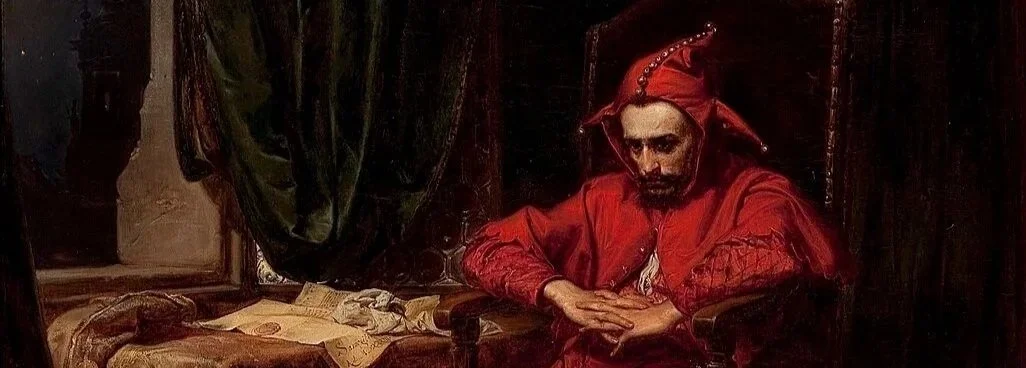
Image: “Stańczyk”, Jan Matejko (1862)
Verdi’s Rigoletto kicked off its run this past weekend, produced and performed by the Canadian Opera Company at the Four Seasons Center for the Performing Arts. This production was an eye-opening take on the story; stunning music, rich visuals, deep characterization, and the frank truths that accompany the story made for a fantastic and dramatic production.
The set struck us immediately. The design was a masterful use of stage depth and allowed for active background story. As we mentioned from the COC’s production of Eugene Onegin in the spring, the capacity to use the whole stage depth is a boon for greater story telling and character development. We were so glad to see the chorus leaning into the acting side of their roles, which is an important compliment to their wonderful singing. The beautiful dresses and tailcoats paired with the gilded age aesthetic was visually intriguing, with each inch of the set having something new to see. We did however find the use of thunder sounds and unsung dramatic exposition an ineffective strategy for set transitions. We have found the previous mode of putting in the surtitles a notice of pause for set change allows for a few things: likely easier on the set staff to not worry about minimizing movement noise, and it also allows the audience to have a moment to chit chat with their neighbour about the events of the act. This helps audiences get a small little break and regain focus while allowing for smoother less clunky transition times.
As for the music, under direction from Johannes DeBues, it was the high calibre we have come to expect from COC productions.
The lead tenor, “The Duke”, Ben Bliss embodied the character well: the arrogant noble strutting through the story. His projection could have been a bit stronger, or perhaps it was a question about fach-role pairing, but let it be clear of his talent was a pleasure to experience. Undeniable was the success of his interpretation of “La donna è mobile”, one of opera’s most popular arias. His understanding of character and his acting brought a new layer to the story which is not made known through casual recording listening.
Quinn Kelsey who played Rigoletto, was a powerhouse in his singing, powerful and expressive. Gilda, sung by Sarah Dufresne, was great in her singing and portrayal of her character. Her bright voice and agile staccato abilities were a fantastic blend of tone and technique. This was Dufresne’s main stage debut, and absolutely someone we hope to see again on the COC stage.
What this opera production did well was its creation of spotlights for what supporting and background characters can add to the immersion and depth of the storytelling. The chorus emphasised Kelsey’s devastatingly emotional rendition of “Lara-Lara”. Or perhaps most intriguingly was the character of Giovanna, played by Simona Genga, who at every turn of her mistress’ back sneered in resentment of her post, telling you everything you needed to know about class tensions without needing to sing a word of explanation. The multifaceted role of the opera artist, from singing to the incredible knowledge of their character, and all that goes into the grand art of opera, was made skillfully aware for all in attendance. Bravissimo tutti!